
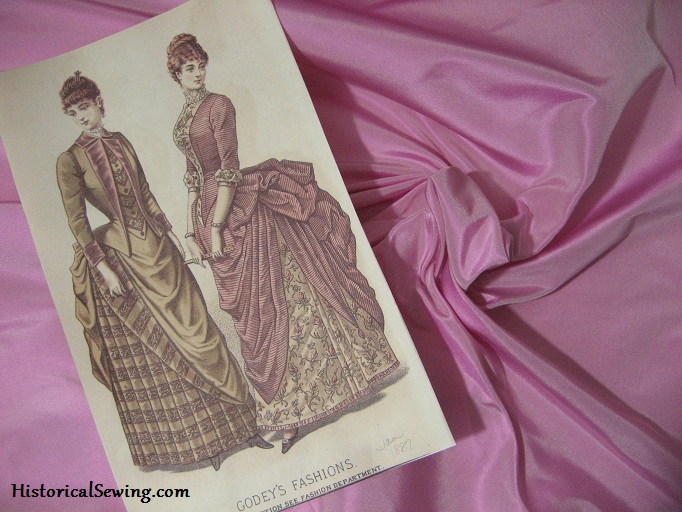
We’ve all been there. Standing in an aisle of gorgeous fabrics… swooning at the computer screen… gazing lovingly (and with drool at the mouth) at THE.PERFECT.FABRIC for that next dress.
Question is… how much to buy??
Will 5 yards be enough? 10? Or do I have to sell a kidney to afford some unmentionable amount of fibers woven together into a textile?? (“Think I’ll just get a yard and use for trim some time.” hehe)
I’ve compiled a list of common garments from the 19th Century and their approximate yardage requirements. Please note – these are *approximate.*
You’ll have to adjust for larger or smaller material widths and for your size (i.e. a 4’11” person will take less yardage than my 5’8″ mother). Take a look at this conversion chart for when you find that “must have” fabric.
The yardages listed approximate using 45″ fabric. If you find a to-die-for silk taffeta in 58″ you might not need as much. Also, if you plan on creating self-trim – you may need several more yards. For ruffles use these calculations. For pleating read this article.
These yardages assume cutting the garment pieces on the “normal” grain for the era – most often “on” grain for bodices and skirts and bias cut for sleeves.
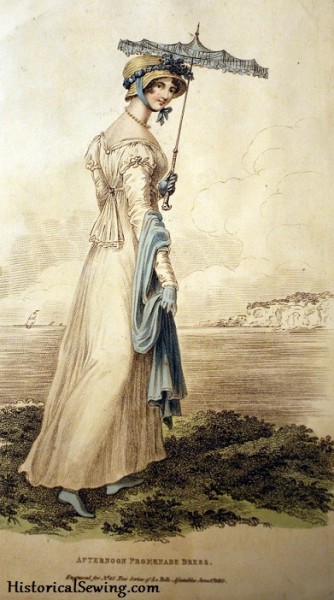
Regency Era c.1800 to 1820
- Basic Dress – 5 to 7 yards
- Evening/Ball Dress with train – 6 to 8 yards
- Spencer jacket – 2 to 3 yards
- Pelisse or Coat – 3.5 to 5 yards
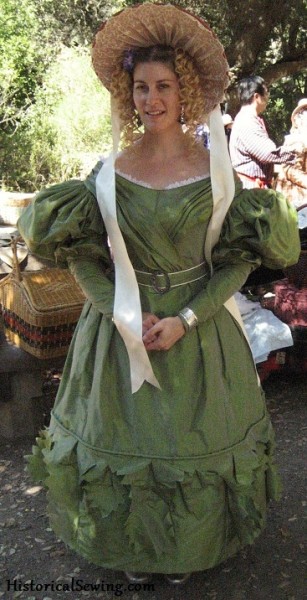
Romantic Era c.1820s & 1830s
- Bodice – 1 to 1.5 yards
- Full puffed sleeves (short), pair – 1 to 1.25 yards
- Full length leg o’ mutton sleeves, pair – 1.5 to 2 yards
- Skirt – 3.5 to 5 yards
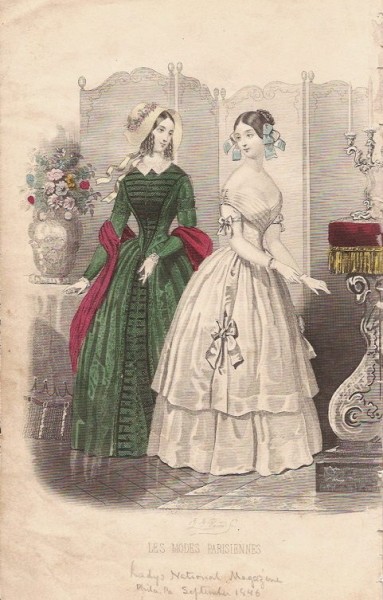
Early Victorian c.1840s
- Bodice with long, tight bias-cut sleeves – 2.25 to 3 yards
- Evening bodice with short sleeves – 1.75 to 2.5 yards
- Skirt – 4 to 5.5 yards
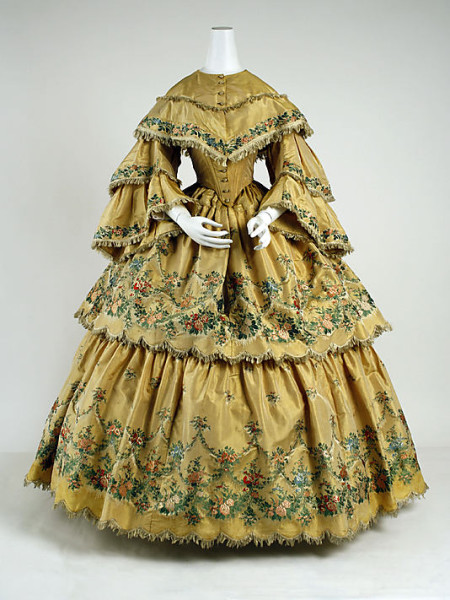
Mid-Victorian c.1850s & 1860s
- Bodice with pagoda sleeves – 3 to 4 yards
- Bodice with fitted sleeves – 2 to 3 yards
- Evening/Ball gown bodice – 1.5 to 2 yards
- Skirt, plain – 5 to 6.5 yards
- Skirt with 3 deep ruffles – above plus 7 yards
- Sheer dress – 8 to 10 yards
To determine the ruffle yardage more accurately, use this precise calculation.
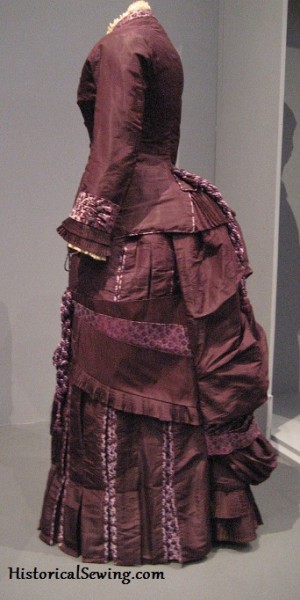
Bustle Era c.1870 to 1889
- Basic bodice – 2.5 to 4 yards depending on the length down on the hips
- Apron overskirt – 3 to 6 yards
- Foundation/Underskirt – 4 to 5.5 yards
- Foundation skirt with train – 5 to 8 yards
Eight to 12 yards is a good starting point for bustle dresses.
The Bustle years are quite varied and can greatly affect amount of yardage needed. (How foofy do you want it?)
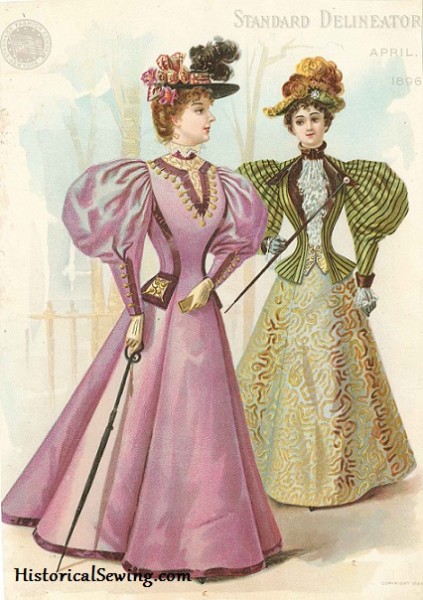
Late Victorian c.1890s
- Bodice (only) – 1.5 to 2.5 yards
- Full length leg o’ mutton sleeves, pair – 1.5 to 3 yards
- Short puffed sleeves, pair – 1.5 to 2.5 yards
- Skirt – 5 to 6.5 yards
The 1890s saw a wide variety of sleeve sizes. Keep this in mind as you select your particular costume year and how this can vary greatly as to the yardage needed.
For underlining fabrics, follow the same approximate yardage as listed.
For fabric suppliers, check out the Fabric & Trim Resource page.
Remember, it’s a good rule to ALWAYS buy a little bit more than you think you need. If you are matching plaids or stripes, cutting pieces on the bias, this will take more yardage.
Self-trims (trims, ruffles, puffs, etc. cut from the dress or complementary fabric) always take more than you think. Plan accordingly. Then use these ideas for using up any small amounts you’re left with.
Hope these guidelines help you! Let me know if I should add something or can help you further.
Greetings! Historical Lovers and Historical Seamstresses
Thank you for your wealth of info on yardage and other sewing tips! I’m trying to make an 1880s bustle walking or tea dress. If allowed would enjoy posting a pic of that on here, I get tickled seeing all these stunning gowns in pics 🙂
Wishing all well on their historical fashion journey!
You are welcome!
The comments here don’t allow for photo or files. But if you have a link to a Pinterest pin or other blog post you can share the link.
Thank you so much! As a beginner (and from a meter country) it’s a bit hard to understand how much you need!
You’re welcome! Glad the amounts can get you started.
This is a terrific site, so glad I found you!!
Welcome to our Joyful Community Tara!
what about petticoats and chemises for 1850s
Chemises run about two to three yards depending on your style (yoked, with/without sleeves).
Petticoat yardage varies depending on if you’re making a plain one or panels with ruffles. Four to five yards covers most plain petticoats. If you are wanting ruffles, this post on 1850s flounces should help.
I love the elagent look in those days. They where so much of a lady back then
This is a fantastic resource. I often find a fabric before I find a specific pattern I want to create!
Thanks so much for this! Does this consider fabric lining or should I calculate that?
I only listed amounts for the main dress fabric. Linings, in whatever capacity and area used, would be additional.