
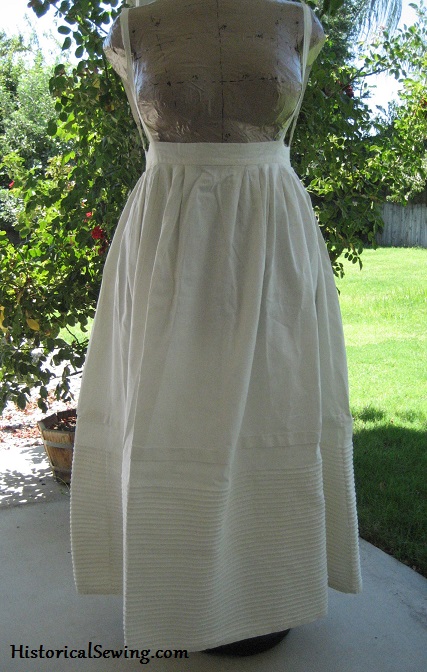
Many years ago I started researching corded petticoats. It all began because I wanted to make an 1830s dress and needed the proper silhouette underneath. There wasn’t much information out there. But I picked up bits and pieces and started to put together what they really were and how they were made.
Then I started collecting… I own a few originals, each with their own methods of construction but still similar. The particular petticoat I’m showing you here awed me. I’d heard of cords being actually woven into fabric but had never seen them…. until I bought this one on eBay. Can you say Jaw-Dropping Fantastic?!
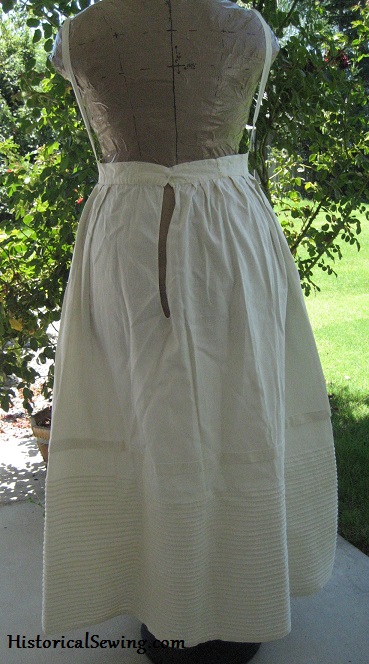
c.1840s Corded Petticoat Vitals
- Fabric: linen with cotton cord that has been starched
- Length: 39 1/4″ including waistband
- Width: 94″, made from 2 panels of roughly 47″ each
- Waistband width: 1 1/2″
- Width of cording section: 13 1/2″
- Number of cord rows: 33
- Hem: 3/8″ or 3/4″ from first cord to selvedge edge
- Opening: 10″
- Tuck: 7/8″ or 1 3/4″ total take up
The Woven Cords
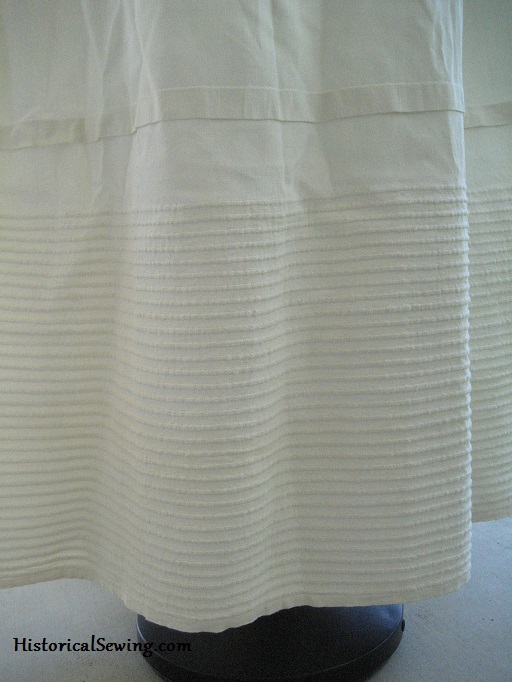
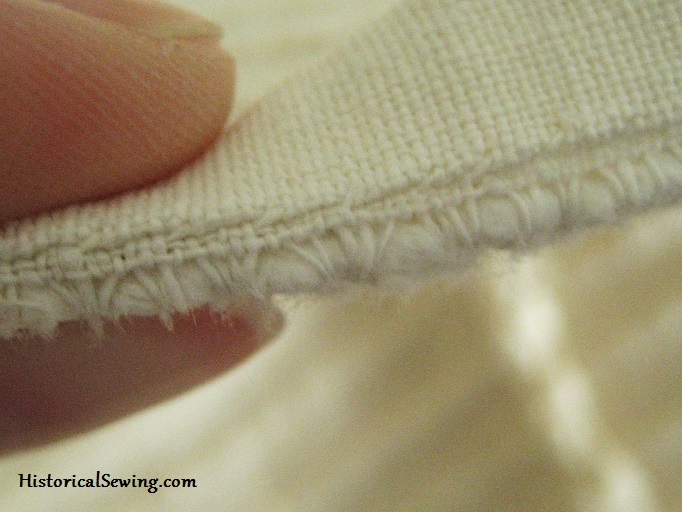
The 13 1/2″ section of cording is made from rows of cotton cording woven in the fabric with the selvedge turned up to create the small hem. A large tuck above it was probably there to shorten the petticoat as they used the entire width of the textile.
It was not uncommon for women to purchase lengths of pre-corded fabric and simply sew in a seam to create the undergarment. This petticoat was made by *somewhat* staggering the rows of cord to reduce bulk within the seam.
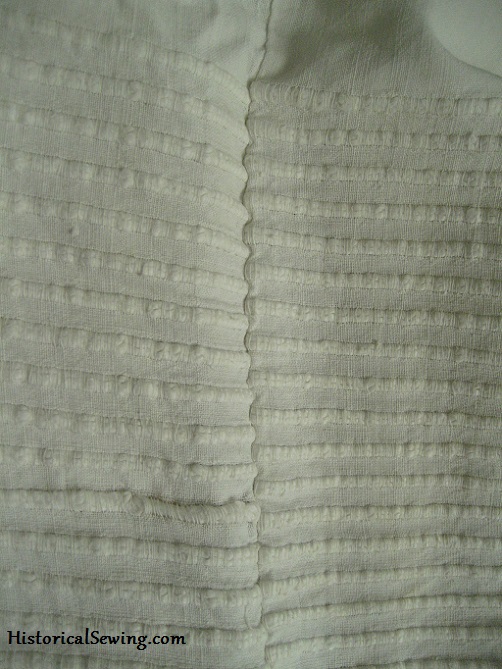
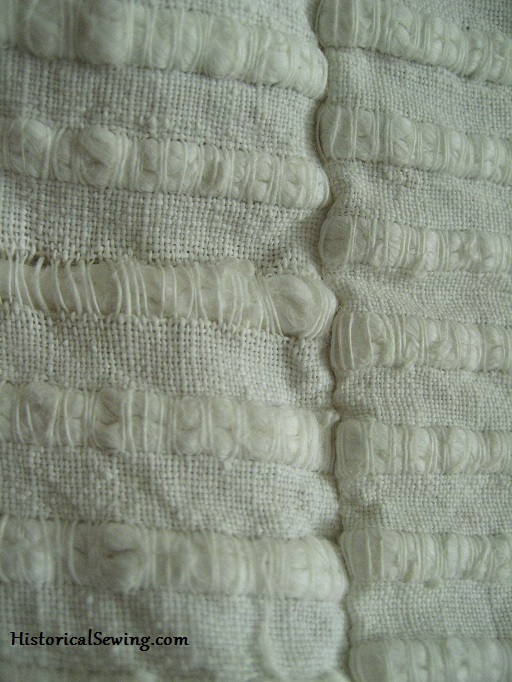
The seam allowance here is about 1/4″. It is made with a tiny running stitch. The cords were not trimmed before seaming and the edges are left loose (no whipstitching to finish).
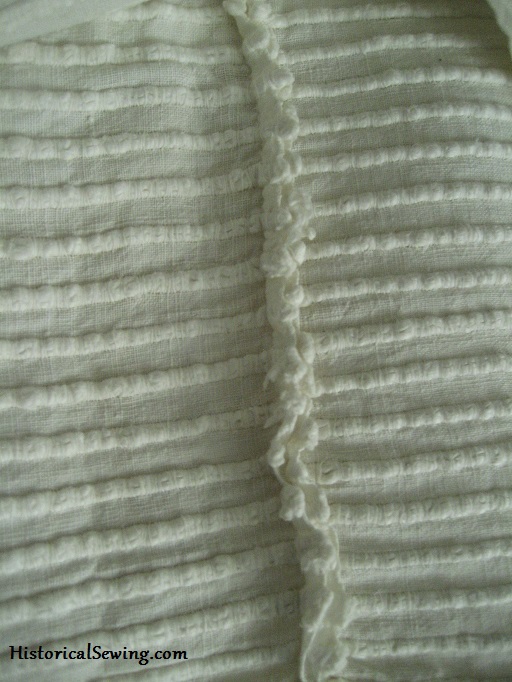
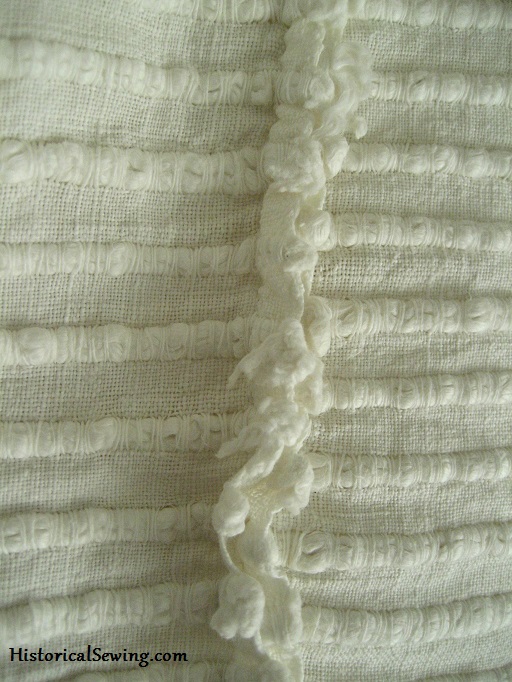
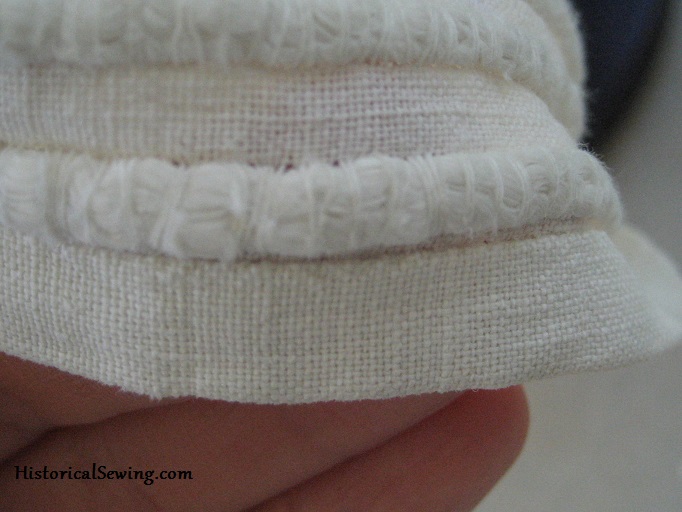
The filler really does appear like a braided cord, not loose shreds of other fiber.
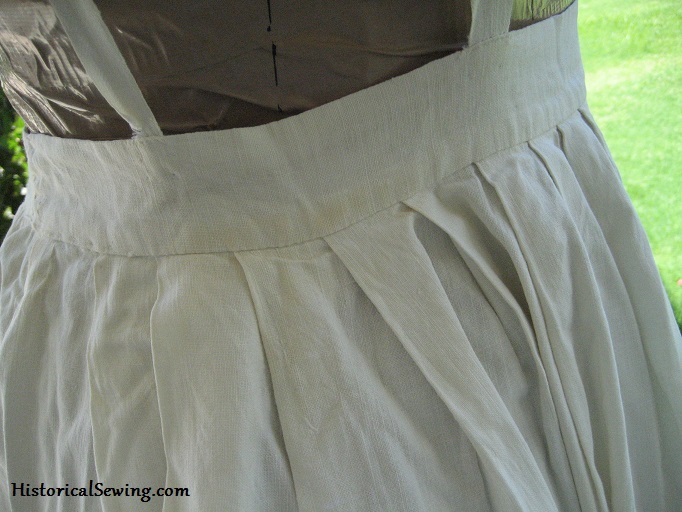
The waistband is wide at 1 1/2″ and unsupported by any type of underlining. The width helps keep it flat against the tight corset. The skirt is set onto the waistband in large knife pleats.
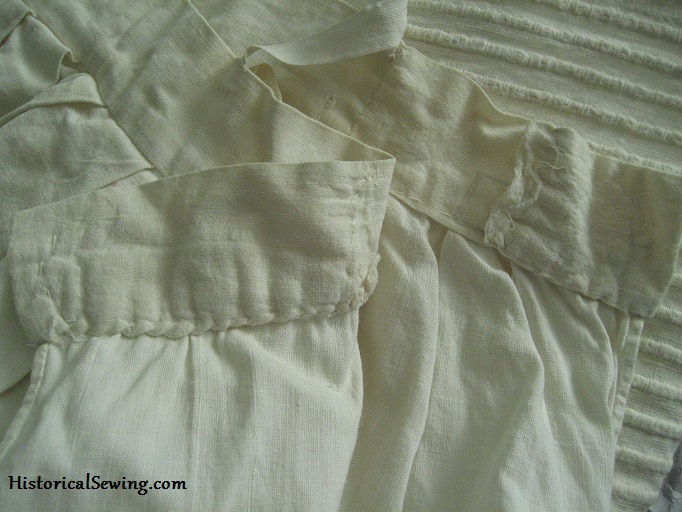
What I find fascinating is that there are no closures on the waistband. The ends around the opening have been repaired with pieces of cotton but no sign of hook & eyes or even tapes sewn to the edges to tie closed.
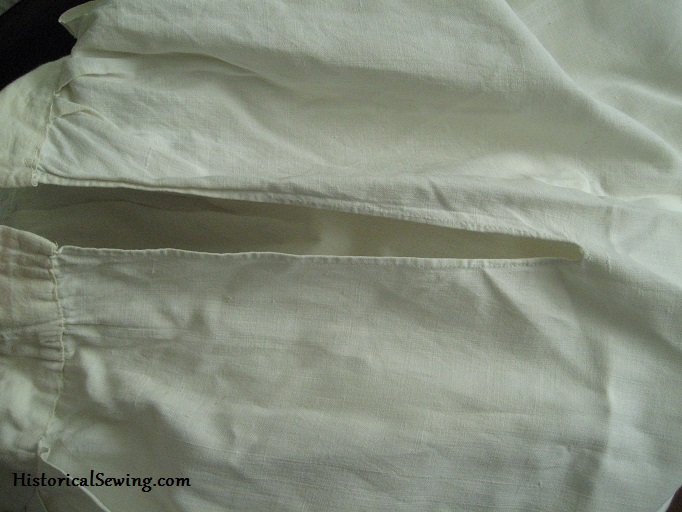
The opening itself is cut straight into the fabric down 10″ from the waistband seam. The edges were rolled inside and stitched down.
Another unusual item about this petticoat is the shoulder straps. I’ve seen them on Regency dresses, both skirts and petticoats, but not on a corded petticoat this late into the century. They are quite long making the waistband sit pretty much at the waist.
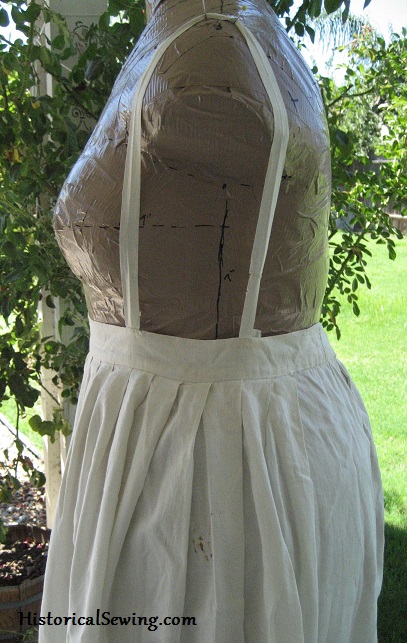
Now that I look at the photos again, I have to admit I may have the petticoat on backward on the dressform. From the photo above the pleats seem to be wide then taper off as they near the opening. That opening may actually be in the center front. Skirts of this era were commonly pleated with the pleats facing forward. This would make sense to have more fabric in the back to fall over a small pad worn right beneath the corded petticoat. hmm….

What do you think about this corded petticoat? Have you woven cords into fabric before or seen it done?
I think that petticoat is actually not 1840s at all! but rather 1820s in fact. The way the straps suspend the petticoat above the natural waistline, along with the fact that the cording only appears to have been applied in the bottom of the petticoat rather than consistently all the way up gives it a conical shape rather than a bell shape. This petticoat reflects the skirt shapes of the 1820s rather than the 1840s.
I would actually agree with you. When I first acquired this corded petticoat I dated it to the 1840s as that was my area of research, and it was too narrow for 1830s. But the straps, as you said, date it earlier as we can see a number of existing undergarments with shoulder straps like this from the 18-Teens through 1820s. The straps, the narrow width, and only lower half being corded are all great points to put it in the 1820s. Thanks for your comment!
I’m wondering if the “woven in” look could be replicated by removing several consecutive threads and replacing them with the cording…and if it would actually be worth the hassle : P I might try it…once.
Well…. it would probably succeed but it would be a lot of work. Maybe try a smaller swatch of fabric first before yardage?? Good luck!
My mom Is going to teach me how to weave so that I can make this. What is the measurement in between the cords?
This fabric reminds me of some bed spreads I’ve seen. I think IKEA carries them.
Thank you for the closer look. It allows me to distill my earlier thoughts, re: the weaving of the petticoat. Since the selvages are an intrical part of the hem, and therefor the waist, the cording must run the length of the fabric. Perviously I thought that the cording was actually warp threads, but I’ve come to the conclusion that in fact, the cords are laid in while the weaver is throwing the shuttle. My reason for this thought is that the reed would have had to be altered to fit the extra spacing of the cording, and reeds were too pricey to be willing to ruin one for such a project. So what it appears to me is….the linen singles were sett as a spaced warp; areas of close threads for the plain weave stripes followed by spaces where there were no warp threads, and repeat, for as many cords as you wish. As the weaving progressed, the number of cotton cords were allowed to be caught in the web, it looks like every other pick, then raised out of the way. Process repeated.
Personally, it would have been much easier to place the cording in the weft, but then the petticoat would have needed more than one panel.
I’ve not seen any photos of corded petticoats with the cording ‘woven’ in. This is a first for me. What an awesome technique. Will have to try it some day.
I love these pictures! I’ve known about these, but never seen such clear photos before.
The weaver at Genesee Country Village and Museum made a run of corded petticoat fabric last spring. They just announced that she’s weaving enough for a few more petticoats, if anyone is interested! More info here, including links to pictures of a completed reproduction, and info on starching it.
http://thesewingacademy.org/index.php?topic=8760.0
I read about their project recently. Great talent (and patience) to reproduce the fabric!